Article
How Rhythmic Gymnastics Dubai Training Builds Flexibility
Learn how rhythmic gymnastics classes in Dubai build flexibility, from stretching methods to monthly costs and tips for choosing a coach.
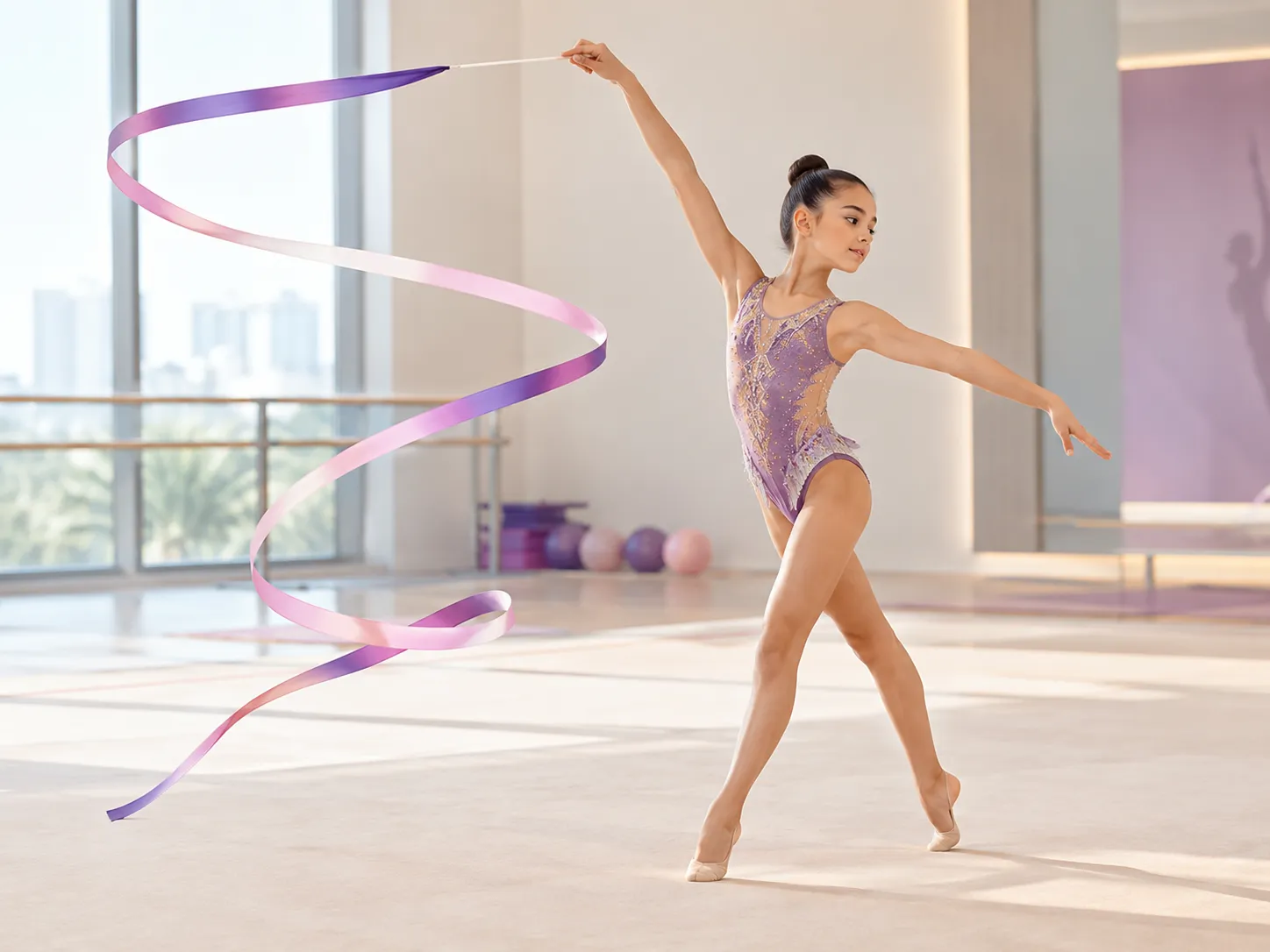
Watch a young rhythmic gymnast sink into a split with a ribbon trailing behind her, and it looks effortless. It is not magic. Coaches at academies like Grace Gymnastics build that range slowly, one safe stretch at a time, across months of practice. This guide shows how rhythmic gymnastics Dubai training builds flexibility, and what parents can expect along the way.
Flexibility is only one piece of the picture. Strength, balance, and rhythm have to grow with it, or the body cannot control the new range. We cover the types of flexibility, the stretching methods, a typical training week, monthly costs, and how to choose a coach. Whether your daughter is four or fourteen, you will leave with clear answers and a few good questions to ask at a trial class.
Why Dubai parents choose kids gymnastics for flexibility
Ask a group of Dubai parents why they signed their daughters up, and flexibility comes up often. Children aged four to ten bend easily, and a good class helps them keep that range as they grow. Without regular practice, many kids lose it by their early teens.
Rhythmic gymnastics is a strong fit for this goal. Athletes work with a hoop, ball, clubs, and ribbon, and every routine needs deep splits, back bends, and high leg lifts, all done to music. The sport has been part of the Olympic Games for women since 1984, so the technique rests on decades of coaching practice.
Dubai adds its own reasons. Summer heat pushes children indoors, and air-conditioned studios give them a safe place to train all year. Warm rooms also help muscles loosen, which makes stretching safer. Many families like that one weekly class mixes exercise, music, and friendship.
Do children need to be naturally flexible to start? No. Coaches build range step by step, and beginner groups in kids gymnastics Dubai programs include children of every ability.
Types of flexibility and the stretching methods coaches use
Not all flexibility is the same. Coaches split it into two kinds. Passive flexibility is how far a limb moves when something else helps, such as gravity or a partner. Active flexibility is how far she can lift and hold a limb using her own muscles. Judges reward the second kind, because a leg held high without help shows real control.
Hips, hamstrings, shoulders, and the spine get the most attention. A straight split needs open hamstrings and hip flexors. A back bend needs a mobile spine and strong shoulders. Skip one area, and the gap shows up later in routines.
Good classes mix several methods. Moving stretches, such as leg swings, wake the muscles at the start. Held stretches work best at the end, when the body is warm. You can read more about how stretching methods affect muscles and joints if you want the science behind each one.
An experienced rhythmic gymnastics coach in Dubai will tell you that range without strength is risky. A child who can drop into a split but cannot lift her leg is more likely to strain a muscle. That is why strength drills sit beside every stretch. The table below compares the main methods.
Method | What it does | When coaches use it | Risk level |
Moving stretches (leg swings, arm circles) | Warms joints and muscles through a controlled range | Start of class | Low |
Held stretches (20 to 30 seconds) | Lengthens muscles while they rest | End of class | Low |
Active flexibility drills | Builds strength at the end of range, like holding a raised leg | Middle of class | Medium |
Partner or coach-assisted stretching | Adds gentle help to deepen a stretch | Older or advanced athletes only | Higher, needs a coach |
A typical training week, step by step
Progress comes from routine, not from long sessions. Most beginner groups train two or three times a week for about an hour. Competitive athletes train more, with extra conditioning on the side. Here is how a single session often runs:
Light cardio and joint circles for about 10 minutes.
Moving stretches for hips, legs, and shoulders.
Strength and balance work, such as holds and rises onto the toes.
Skills practice with the hoop, ball, clubs, or ribbon.
Choreography to music.
Held stretches and a short cool-down.
Here is how rhythmic gymnastics Dubai training builds flexibility week by week. Timelines vary by child, but a common pattern holds. In the first month, coaches focus on posture and gentle range. By month three, many children hold deeper stretches with better control. After six months, athletes start combining flexibility with apparatus work and short routines.
Take a common case. A seven-year-old joins a beginner group after school and can barely touch her toes. Her coach adds ten minutes of hip and hamstring work to every class and sets a five-minute routine for home. By the end of the term, she reaches her toes and holds a low split with straight knees.
Monthly class fees and what drives the price
Fees depend on the level, the class length, and how many coaches work with each group. Competitive training costs more because athletes train longer, travel to events, and need personal coaching. UAE fees for kids and beginners vary a lot from one academy to the next.
For a local example, Grace Gymnastics lists three monthly levels on its website: 360 AED for beginners, 680 AED for intermediate, and 1,656 AED for competitive. Check the current figures before you book, since academies update prices. Local academies such as Grace Gymnastics also run holiday camps, which add flexibility practice during school breaks.
Extra costs are worth asking about. Leotards, grips, and apparatus can add to the bill, and competition entry fees come on top. Parents often ask how rhythmic gymnastics Dubai training builds flexibility fast enough to justify the fee. The honest answer is that steady attendance matters more than a pricier plan.
How to choose a coach and academy near you
Start by checking the coach, not the studio. Ask about their training background, their experience with children your daughter's age, and how they handle stretching. A good coach never forces a child into a split or pushes on her back or legs.
Next, look at the space. A safe studio has padded or sprung floors, mirrors, good airflow, and room for each athlete to work with apparatus. In Dubai, ask whether the academy holds a sports license and ask to see it.
Location matters because you will make the trip several times a week. Families in Dubai Silicon Oasis can look at gymnastics classes in Dubai Silicon Oasis, while others may prefer a studio near Al Khail Road or Al Waha.
An academy that focuses on rhythmic gymnastics every day, like Grace Gymnastics, will have coaches who have competed in the sport, group levels that move from beginner to competitive, and stretching taught in a set order. A general fitness club often runs one mixed class for all ages, and the stretching can feel rushed. Why settle for a mixed class when your daughter can follow a clear pathway? Book a trial class, watch how coaches speak to children, and ask how they track progress.
Conclusion
Flexibility grows from patient routine, strong coaching, and respect for a child's limits. Now you know how rhythmic gymnastics Dubai training builds flexibility: warm muscles, steady practice, and strength to match the range. Your next step is simple. Book a trial class, watch the coaching, and ask questions. To talk with Grace Gymnastics about levels and schedules, contact us at any time. A calm, steady start is the kindest way to begin.
Frequently asked questions
Can you explain how rhythmic gymnastics Dubai training builds flexibility for beginners?
Classes combine warm-ups, moving stretches, strength drills, and held stretches at the end. Coaches raise the range a little each week, so muscles adapt safely. Regular attendance and short home practice make the biggest difference over a few months.
At what age can a child start rhythmic gymnastics in Dubai?
Many academies take girls from about four or five, and some run toddler groups. Younger children focus on play, posture, and coordination. Formal stretching begins gently. Ask each academy about its age groups before you book a trial.
How much do gymnastics classes cost per month in Dubai?
Fees vary by academy and level. One local academy lists 360 AED for beginners, 680 AED for intermediate, and 1,656 AED for competitive groups. Confirm current prices, class length, and number of weekly sessions before you compare options.
What extra costs should I expect beyond monthly fees?
Plan for leotards, grips, apparatus such as a ribbon or hoop, and competition entry fees. Holiday camps and uniforms may be charged separately. Ask the academy for a full list of one-off and recurring costs before you enrol.
Do I need a permit for my child to join a gymnastics academy in Dubai?
Parents do not need a permit. Sports academies in Dubai operate under licensing rules, so you can ask to see the academy's license. Expect to sign a registration form and share basic health details.