Article
How to Prevent Injuries in Kids Gymnastics Training
An authority-focused guide to safe training, explaining how expert supervision and proper facility standards help prevent injuries in rhythmic gymnastics.
Rhythmic gymnastics is a sport of extreme flexibility and high-impact landings. While the movements look effortless and "graceful," they require significant physical resilience and a meticulously managed training load. At Grace Gymnastics, our number one priority isn't the gold medal—it’s the long-term health and well-being of our athletes. Injury prevention is woven into every minute of our training, from our youngest newcomers to our international competitors.
In a high-performance environment like Dubai, where children often participate in multiple sports, understanding the "safety-first" approach is vital for parents. We believe that a gymnast who trains safely is a gymnast who trains for life. By focusing on scientific foundations and professional supervision, we ensure that the "Grace" in our name applies to both the beauty of the movement and the care of the athlete.
The Foundation of Safety: Warm-Ups and Cool-Downs
The most common injuries in gymnastics occur when the body is not properly prepared for the demands of the sport. A "cold" muscle is a brittle muscle, and in rhythmic gymnastics, we push the body to its mechanical limits.
Dynamic vs. Static Stretching
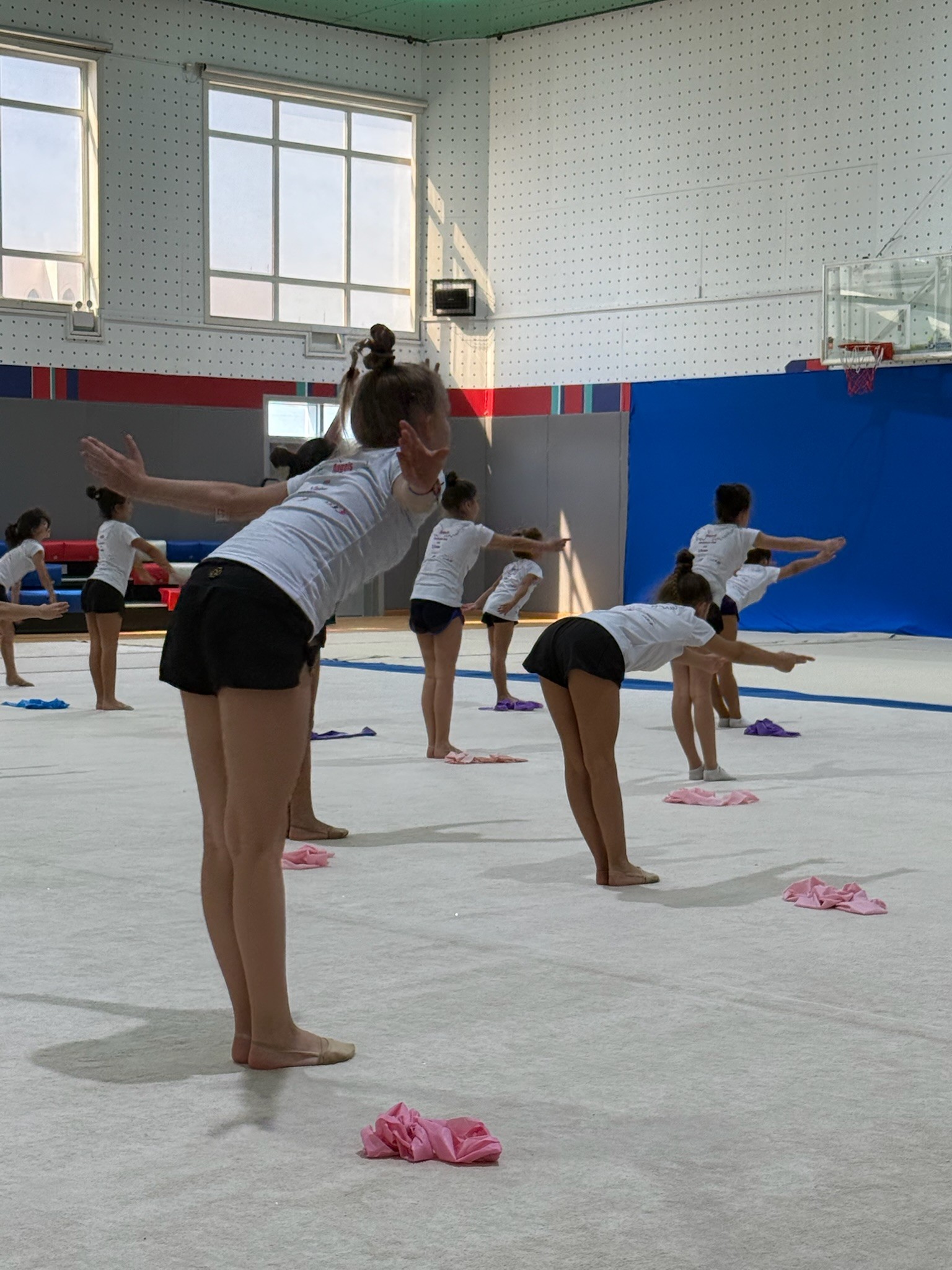
Not all stretching is created equal. At the start of every class at Grace Gymnastics, we utilize Dynamic Stretching. These are active movements—such as leg swings or arm circles—that increase blood flow and wake up the nervous system. We save Static Stretching (holding a position for 30+ seconds) for the end of the session. This cool-down phase is essential for lengthening the muscles and improving long-term flexibility without compromising the joint stability needed during active jumps.
Preparing the Joints: Wrists, Ankles, and Spine
Gymnasts put unique pressure on their joints. Our coaches implement specific strengthening exercises for the "supporting" muscles. We focus on ankle stability to prevent sprains during landings and wrist mobility to handle the weight of the apparatus. By strengthening the small muscles around the spine, we ensure that the extreme back flexions required in rhythmic gymnastics are supported by a strong muscular "corset."
The Science of Load Management
Injury prevention is a numbers game. "Load management" refers to balancing the intensity of training with the body’s ability to recover.
Recognizing the Signs of Overuse
Young athletes are often so eager that they ignore minor pains. Our Eastern European coaching staff is trained to distinguish between "good" muscle soreness (DOMS) and "bad" joint or tendon pain. We educate parents on "growth plate" sensitivity, especially during growth spurts, ensuring that training intensity is adjusted when a child’s body is undergoing rapid change.
The Importance of Rest and Recovery Days
Muscles don't grow on the mat; they grow while we sleep. For our competitive gymnasts, we design training schedules that include mandatory recovery periods. This allows the micro-tears in the muscle fibers to heal, resulting in a stronger, more explosive athlete. Rest is not "time off"—it is a critical component of a professional training plan.
Facility Safety and Professional Supervision
The environment in which a child trains is just as important as the exercises they perform.
Why Flooring Matters: The GEMS Al Khail Advantage
Training on a hard or unforgiving floor is a recipe for shin splints and stress fractures. This is why Grace Gymnastics partners with world-class venues like GEMS International School Al Khail. Our professional-grade mats provide the necessary shock absorption for repetitive leaps, while high-ceiling environments allow for safe apparatus tosses, preventing accidental collisions with light fixtures or low beams.
Certified Coaching: The Human Element of Safety
Our coaches act as the first line of defense against injury. They are trained to spot "technique fatigue." When a gymnast’s form begins to fail due to tiredness, we stop the repetition. Pushing through bad form is when accidents happen. Under the watchful eye of a professional coach, every movement is monitored for technical precision, which is the ultimate safeguard against injury.
Best Gymnastic for Kids in Dubai
When it comes to the best gymnastics for kids in Dubai, safety is the ultimate metric of quality. Grace Gymnastics stands out because we refuse to take shortcuts.
With our world-class coaching staff, many of whom are Masters of Sports from Eastern European nations—the heartland of rhythmic gymnastics. We don't just teach "moves"; we build the foundations of physical excellence that will serve your daughter in any sport she chooses later in life. With convenient locations across Dubai, including Al Quoz and GEMS International School Al Khail, we make elite training accessible for every family.
Give your daughter a safe, professional start in sports! Join a community that prioritizes the health of the athlete.
A safe gymnast is a happy gymnast. By prioritizing science-based training, high-quality facilities, and professional oversight, we ensure that every girl at Grace can pursue her passion with confidence and longevity. Rhythmic gymnastics is a journey of a thousand leaps—let’s make sure every single one is a safe one.